Roof and downspout runoff
A large roof can release a concentrated volume of water beside the foundation or into one small bed. Downspout extensions and solid pipe may be more appropriate than a gravel-filled trench.
 Let’s talk ↗
Drainage solutions · Hampton Roads, VA
If water stands in the lawn, floods a bed or runs toward the house, we trace where it comes from and build a practical path to a responsible outlet.
Yard drainage and grading
Standing water can come from a low spot, concentrated roof runoff, compacted soil, an adjoining property, a blocked drain or a grade that never had enough fall. Those problems do not all need the same fix.
Commonwealth Landscaping evaluates the source, volume and route of the water before recommending pipe or excavation. We ask what happens during and after a hard rain, review downspouts and low areas, and identify a lawful, workable place for the water to discharge or soak in. The goal is a system that solves the original problem without moving it to a neighbor, sidewalk or another part of the yard.
Every drain needs somewhere for the water to go. We establish that destination before deciding where to trench, what to collect and which type of pipe or inlet belongs in the system.
Find your starting point
Choose the closest symptom. This is not a remote diagnosis; it shows what we would investigate first on your property.
A sensible first look
The first question is whether water collects on the surface, moves through saturated soil from upslope, or simply cannot infiltrate compacted ground.
Tell us how long the area stays wet after rain and whether it is always the same footprint.
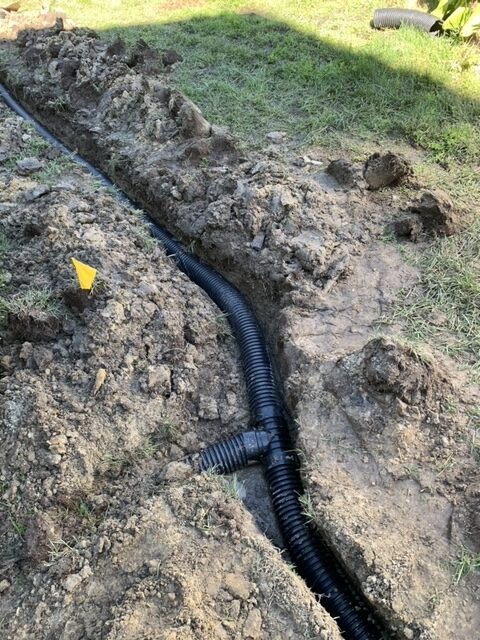
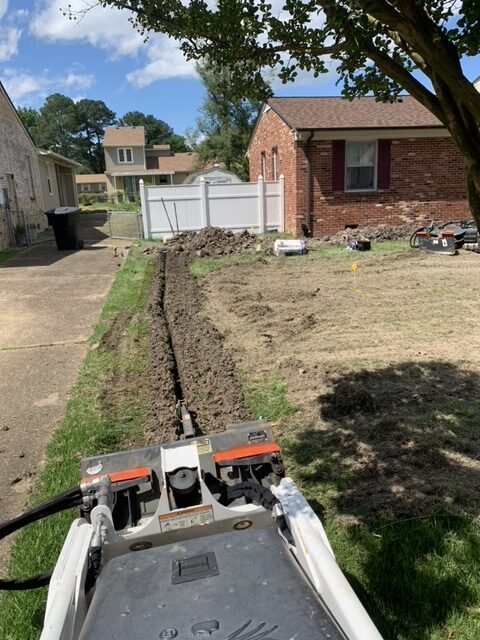
A perforated subsurface drain intercepts water moving through saturated soil and carries it toward an appropriate outlet. It is useful for the right type of wet area—not every puddle.
Best for: persistent subsurface water along a defined routeA surface inlet collects water at a low point and connects it to solid pipe. Grading must direct water to the inlet, and the grate needs to remain accessible for cleaning.
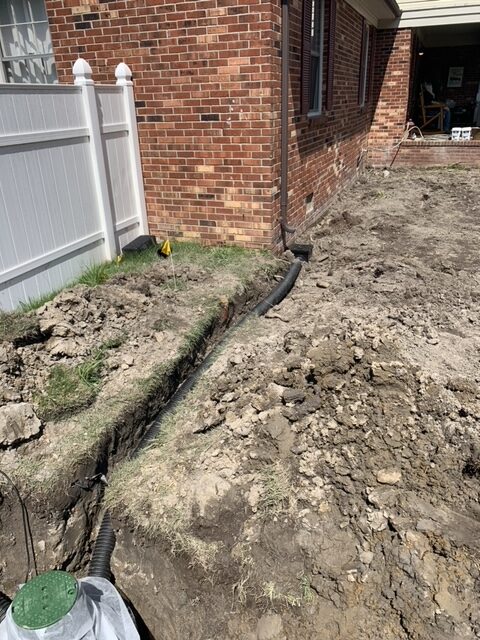
Best for: visible pooling at predictable low spotsBuried solid pipe moves concentrated roof runoff away from beds and foundations. Cleanouts, connections and a suitable termination help keep the system serviceable.
Best for: washed-out beds and water beside the houseSmall changes in elevation can restore positive surface flow. A shallow swale may move broad runoff with fewer underground components when the site has a workable destination.
Best for: flat lawns, low areas and sheet flowA linear drain intercepts water across the edge of a patio, drive, garage or threshold and conveys it through solid pipe to an approved outlet.
Best for: runoff crossing paved surfacesWhere soil, space and local requirements allow, a subsurface storage area can hold runoff and release it into the surrounding soil. Capacity and overflow still need to be considered.
Best for: sites without a simple gravity outletWhen gravity cannot reach a suitable outlet, a pump may be considered. Pumped systems bring electrical, maintenance and failure-planning requirements that should be clear before installation.
Best for: constrained low areas where gravity is not workableExisting inlets and lines may fail because of sediment, roots, separated fittings, crushed pipe or an obstructed outlet. We first determine whether the system is repairable and whether its original design still makes sense.
Best for: older systems that stopped performingSelected surfaces, planted depressions and amended areas can slow or absorb runoff when the site can support infiltration. These measures may supplement conveyance rather than replace it.
Best for: reducing runoff and adding landscape valueWe identify where the collected water can go before establishing the pipe route or promising that a particular drain will work.
Catch basins collect water on top of the ground; French drains intercept water in saturated soil. Mixing up those jobs leads to weak recommendations.
Once water is captured from a basin, downspout or channel, solid pipe carries it without intentionally releasing it along the route.
Inlets, cleanouts and terminations need to remain visible and reachable so sediment and debris can be removed.
Underground utilities, irrigation, roots, fences, access and existing hardscape affect the route and excavation plan.
A buried system still depends on the surface above it. Soil, sod, seed or bed restoration should direct water correctly and leave components accessible.
We ask where water appears, how deep it gets, how long it remains and what changed before the problem started.
We review roof runoff, grades, paved surfaces, soil conditions, existing drains and feasible discharge or infiltration areas.
The crew establishes elevations, excavates the planned route, sets pipe and inlets, makes connections and protects service access.
We check flow where practical, complete finish grading and restore disturbed lawn or beds as defined in the proposal.
Practical answers
Straight answers to the questions we hear most often. Advice for your property starts with an on-site evaluation.
Maybe, but not every wet yard does. French drains are useful for intercepting subsurface water in saturated soil. A surface low spot may need grading and a catch basin, while a downspout problem may need solid pipe. We identify the type of water before recommending the component.
That is one of the first questions we answer. The property needs a workable place to discharge or infiltrate collected water without creating a new problem. The available grade, soil, easements, property lines and local requirements can all affect the destination.
Yes, when there is a suitable route and termination. Downspout lines generally use solid pipe because the goal is to carry concentrated roof water away without releasing it beside the house. We also consider cleanout access and overflow behavior.
Only the water that can reach it. The surrounding grade has to direct surface flow to the grate, and the connected pipe needs enough fall and a suitable outlet. Several low areas may require multiple inlets or broader grading.
We can inspect accessible components and determine whether cleaning, reconnecting or replacing part of the system is reasonable. Crushed pipe, poor pitch, buried inlets or an inadequate outlet may make a partial repair ineffective.
The answer depends on rainfall, soil and the intended use of the area. A brief wet period after a major storm is different from water that regularly remains for days, damages turf or reaches the house. Photos taken during and after rain are helpful during evaluation.
Yes. Grates collect leaves and sediment, cleanouts can need flushing, outlets can become obstructed and surrounding soil can settle. Keeping the visible components open is important to long-term performance.
Exterior grading and runoff may be part of the issue, but active interior water, plumbing leaks, foundation defects or structural concerns can require a waterproofing, plumbing, foundation or engineering specialist. We will be direct when the problem extends beyond landscape drainage.
Explore more
Local service coverage
Explore city-specific planning considerations and request a property evaluation in your community.
Free on-site evaluation
Include the affected area, how long water remains and whether it reaches the house, driveway or neighboring property. Photos taken during wet weather are especially useful.
(757) 839-4911info@commonwealth-landscape.com