Commonwealth field guide · Hampton Roads
Landscape planning for coastal Virginia properties
Plan planting, turf, drainage and maintenance around Hampton Roads sunlight, soil, rainfall and long growing seasons instead of choosing plants by appearance alone.
A landscape can look complete on installation day and still be poorly planned. The more useful test is how the property will function after several summers: whether plants fit their space, turf matches the light, water moves responsibly and the level of care remains realistic for the owner.
Map the site before selecting plants
Sun labels are only a starting point. Morning sun, reflected afternoon heat, high shade and dense shade create different conditions even when each area receives a similar number of bright hours. Observe the property at several times of day during the growing season.
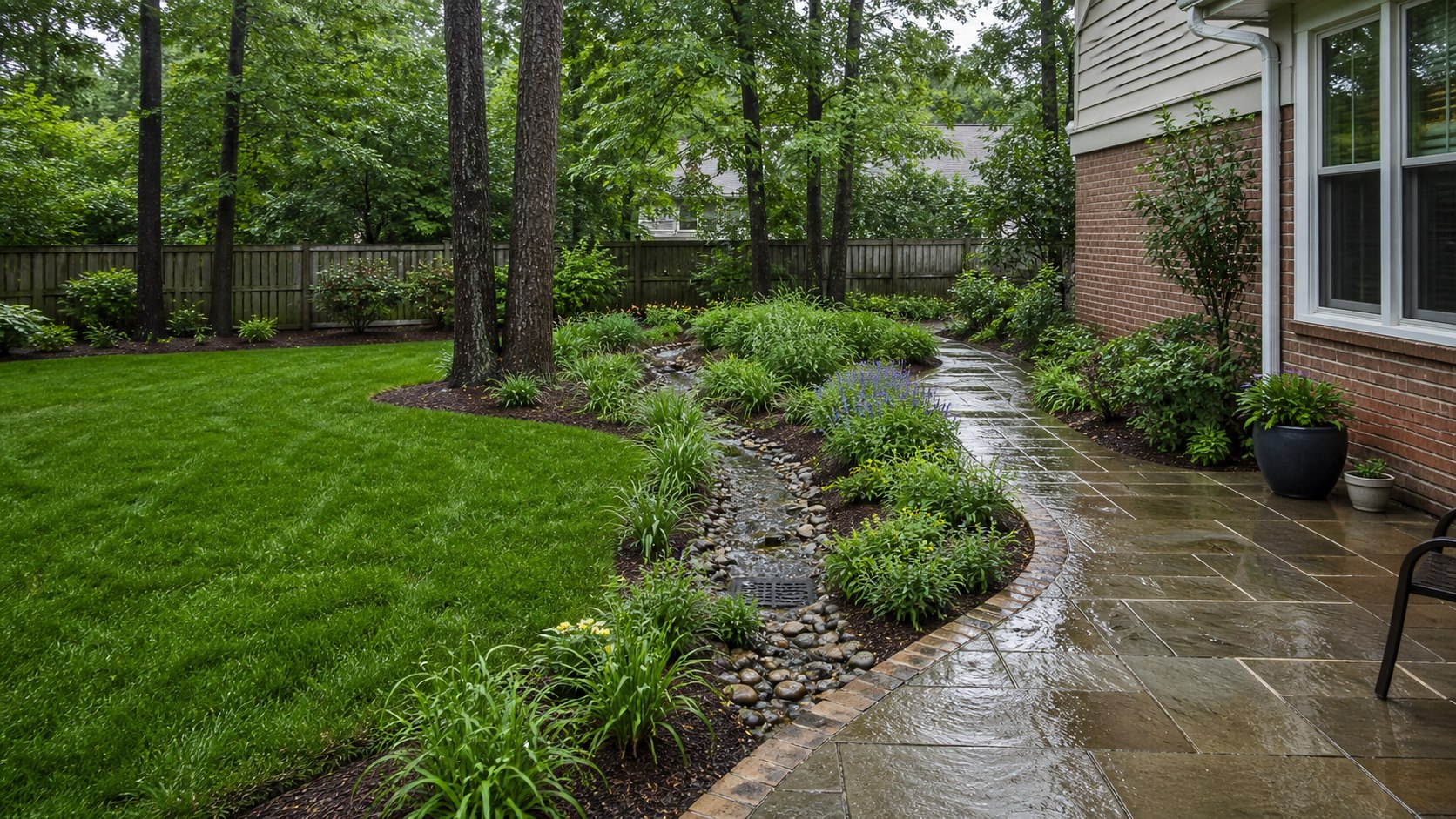
Map roof discharge, low ground, compacted paths, large roots, utilities, views from inside the home and the routes used by people and pets. These observations determine where beds can expand, where screening is useful and where planting should stay low to preserve access or sightlines.
Treat soil as a condition to understand—not a product to add
Developed properties may contain native soil, construction fill and amended planting beds within a few feet of one another. Texture, compaction, drainage and pH can vary accordingly. Soil testing helps identify nutrient and pH needs, but physical drainage and compaction still have to be evaluated in the field.
Adding rich material to an isolated planting hole does not automatically improve establishment and can create an abrupt interface around the root ball. Preparation should support root growth into the surrounding soil and should follow the requirements of the selected plants and the conditions found on site.
Design at mature size
Young shrubs are often installed too close to walls, walks and one another because a newly planted bed looks empty. Mature-size planning reduces repeated shearing, blocked windows and plants growing into equipment. Temporary open space can be handled with mulch, groundcover or a limited layer of shorter-lived perennials.
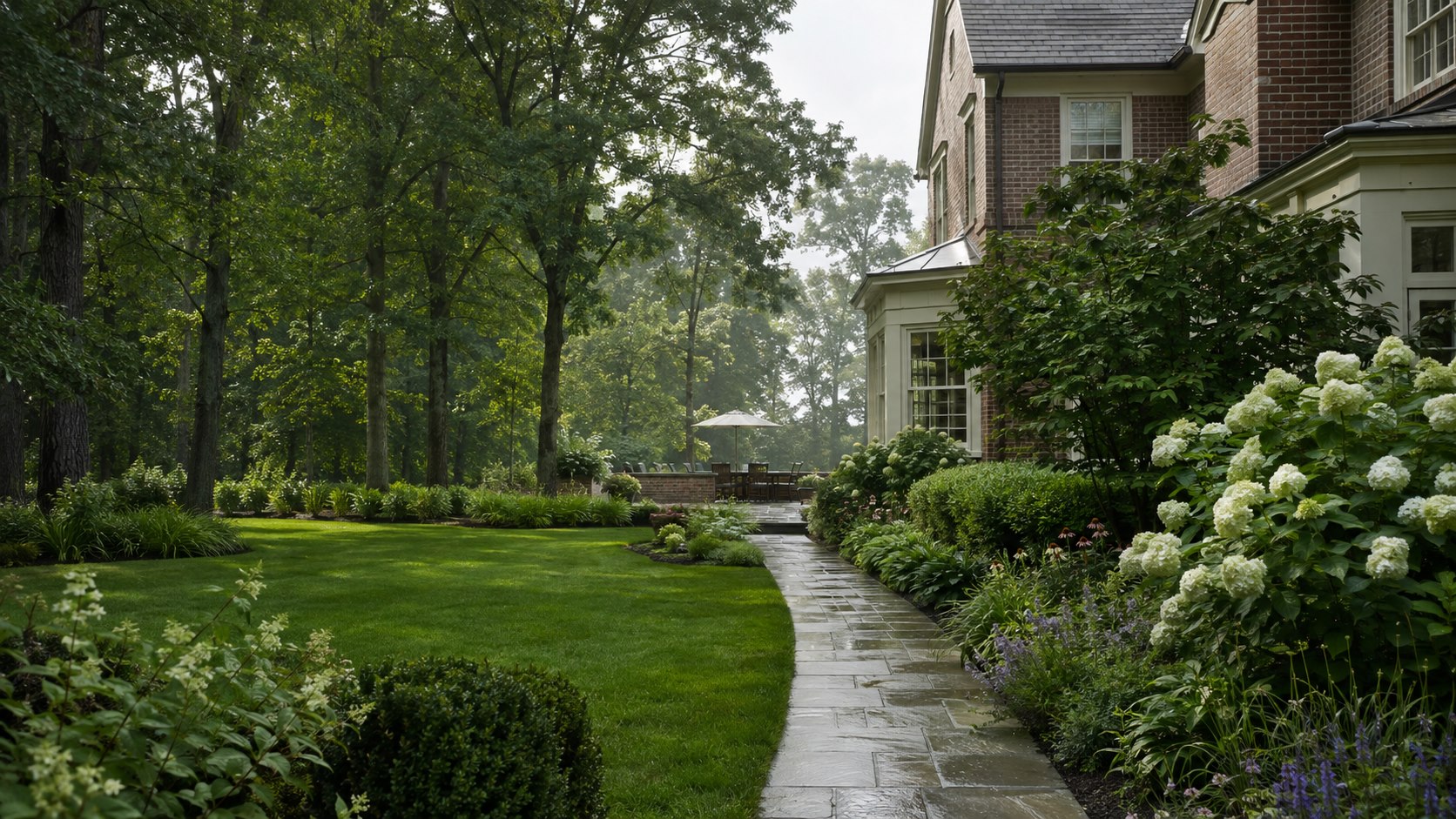
Structure should come from more than flowers. Evergreen mass, branching form, foliage contrast, bed geometry and hardscape keep the landscape composed through winter and between bloom cycles.
Choose turf by site and expectation
Virginia sits in a climatic transition zone where cool-season and warm-season grasses each involve tradeoffs. Light, traffic, irrigation, desired winter color and tolerance for seasonal dormancy should inform the choice. A species that performs well in a sunny front lawn may fail beneath mature trees in the backyard.
The best lawn plan may also reduce turf in areas that are chronically shaded, wet, narrow or difficult to mow. Planting, mulch or a hard-wearing path can be more durable than repeatedly reseeding an area that does not support dense grass.
Plan the construction sequence
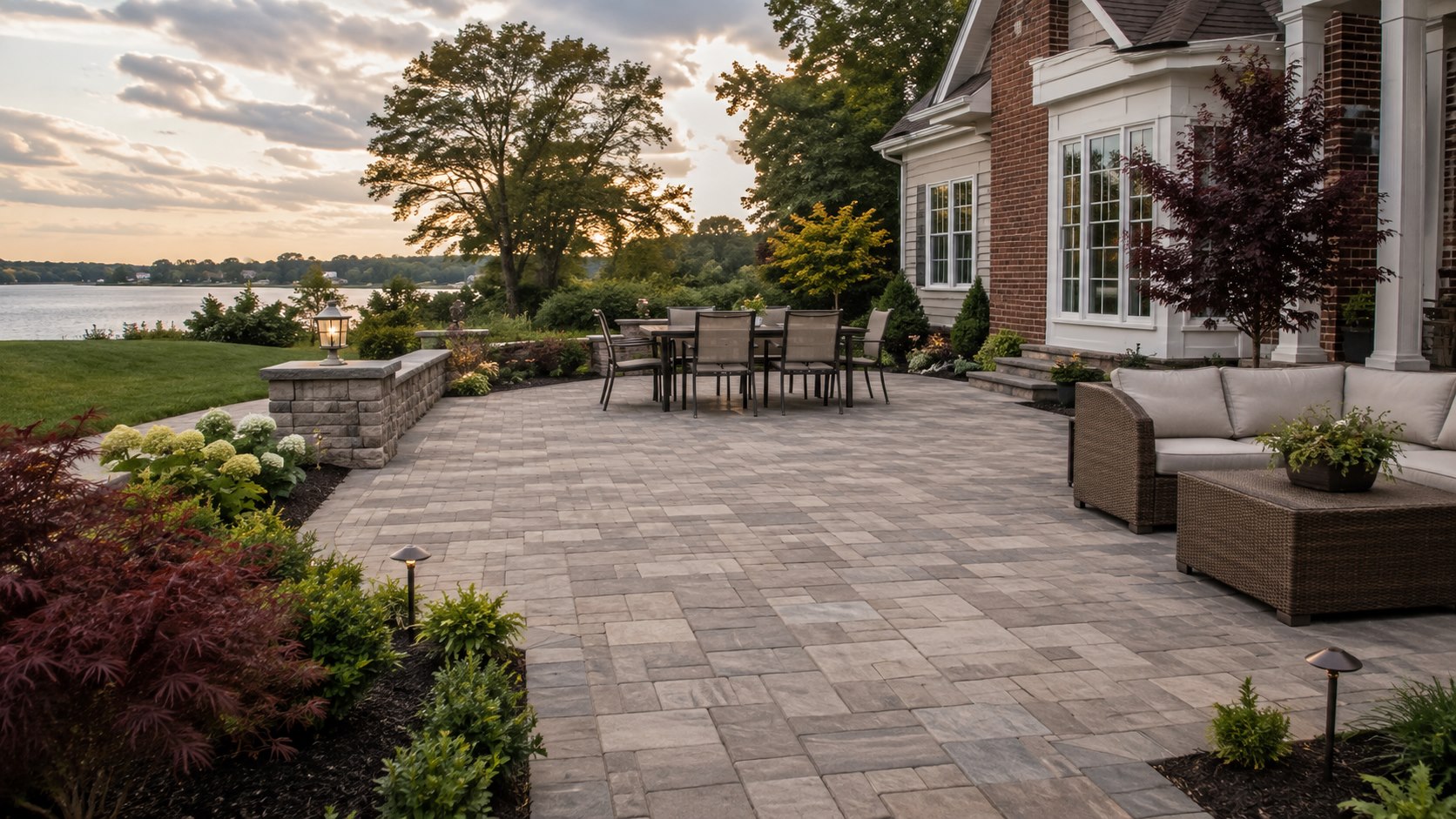
Drainage and rough grading should be resolved before finish planting. Hardscape excavation and base installation should occur before delicate material is placed nearby. Irrigation sleeves, lighting conduit and future utility routes are easier to provide before the patio or walk is complete.
For a phased project, establish the final circulation, drainage and major planting framework first. That keeps early work from being removed when a later patio, wall or access route is built.
- First: drainage, utilities, demolition and rough grading.
- Second: walls, patios, walks and structural site work.
- Third: soil preparation, major trees and shrubs, then smaller planting.
- Last: turf restoration, mulch, final cleanup and establishment care.
Further reading
These primary resources informed the regional and technical context in this guide.